

TRANSVENOUS
PACEMAKERSOPTIMIZE YOUR PATIENT THERAPY
PACEMAKERSOPTIMIZE YOUR PATIENT THERAPY
ASSURITY MRI™ PERFORMANCE OVERVIEW
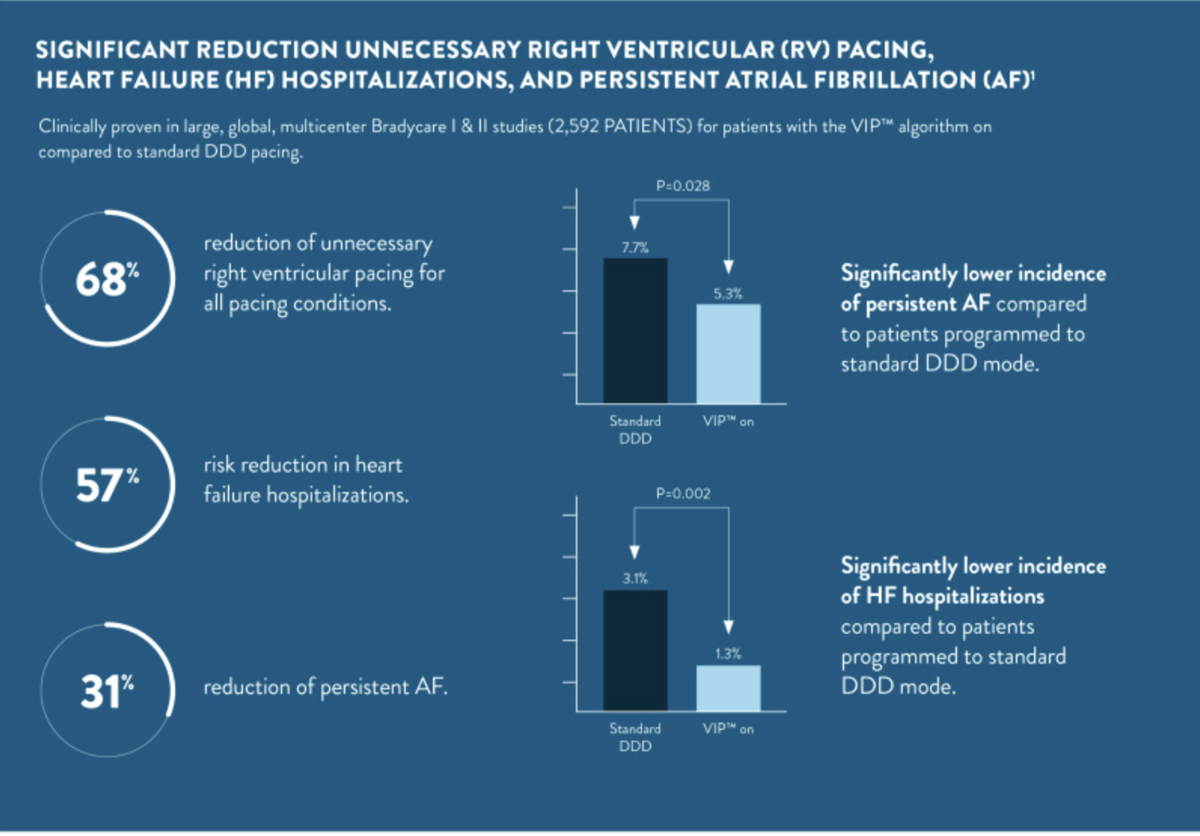
Optimize patient therapy with the Ventricular Intrinsic Preference (VIP™) algorithm
LEARN MORE:
STANDARD OF CARE
As the standard of care,* wireless remote monitoring significantly improves patient outcomes and reduces hospital admissions according to studies performed on the US population.2-5

27% reduction
in all-cause mortality over 3 years2

24x greater
probability of survival3

36% reduction
in cardiac or device-related
emergency room or hospital visits4

18% reduction
in mean length of stay, with
an estimated savings of $1,793
per stay5

COST-EFFECTIVE
- Reimbursement available for remote monitoring
- Remote monitoring can reduce spending over 3 years by 9% ($4,356 per patient)2
- VIP™ algorithm can significantly reduce HF hospital spending by 55.8% ($85.23 per patient per year, P=0.01)6
- Automatic scheduling of remote monitoring lets your clinic schedule and bill all appropriate device checks
Connext
Hub
Hub
TV

Why Leadless Pacing Summit 2026 Matters

Leadless in Congenital Patients
When Patients Evolve: Upgradability in Leadless

Optimizing Tricuspid Valve Crossing: Case example

Optimizing Tricuspid Valve Crossing: Case example

Health Economics of Leadless Therapy

Learn AVEIR Leadless Pacemaker Follow-Up Checks

Discover AVEIR AR2: Enhanced Battery Longevity
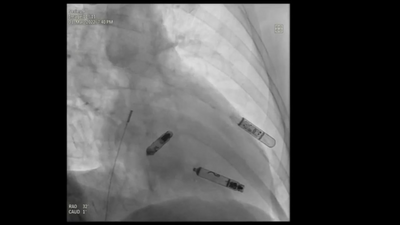
AVEIR DR Implant Positioning Under Fluoroscopy

Introducing AVEIR DR: True AV Synchrony Without Leads
References
- Arnold M, Richards M, D'Onofrio A, et al. Avoiding unnecessary ventricular pacing is associated with reduced incidence of heart failure hospitalizations and persistent atrial fibrillation in pacemaker patients. Europace. 2023;25(5):euad065. doi: 10.1093/europace/euad065.
- Sutton B, Zigler J, Gopinathannair R, et al. Improved health outcomes and cost-savings with remote monitoring of cardiac implantable electronic devices. Presented at Heart Rhythm Society Meeting; May, 2013; Denver, CO. Retrospective claims analysis of Medicare 5% sample Limited Data Set Standard Analytical Files claims and enrollment data across all manufacturers.
- Landolina M, Perego GB, Lunati M, et al. Remote monitoring reduces healthcare use and improves quality of care in heart failure patients with implantable defibrillators: the evolution of management strategies of heart failure patients with implantable defibrillators (EVOLVO) study. Circulation. 2012;125(24):2985-92. doi: 10.1161/ CIRCULATIONAHA.111.088971.
- Mittal S, Piccini J, Fischer A, et al. Remote monitoring of ICD patients is associated with reduced mortality irrespective of device type. Presented at Heart Rhythm Society Meeting; May 2014; San Francisco, CA. This was a retrospective data review and had limitations.
- Crossley GH, Boyle A, Vitense H, et al. The CONNECT (Clinical Evaluation of Remote Notification to Reduce Time to Clinical Decision) trial: the value of wireless remote monitoring with automatic clinician alerts. J Am Coll Cardiol. 2011;57(10):1181-9. doi: 10.1016/j.jacc.2010.12.012.
- Faulknier B, Richards M. The association of the use of the ventricular intrinsic preference (VIP™) feature with heart failure hospitalization in pacemaker patients. Presented at the XV International Symposium on Progress in Clinical Pacing; December, 2012; Rome, Italy.
™ Indicates a trademark of the Abbott group of companies.