

TACHYCARDIA
Tachycardia is a broad term for a variety of rapid cardiac arrhythmias.1,2 It is commonly associated with underlying cardiac abnormalities.1,2 If left untreated, in serious cases, this can lead to heart failure or cardiac arrest.3,4
TACHYCARDIA
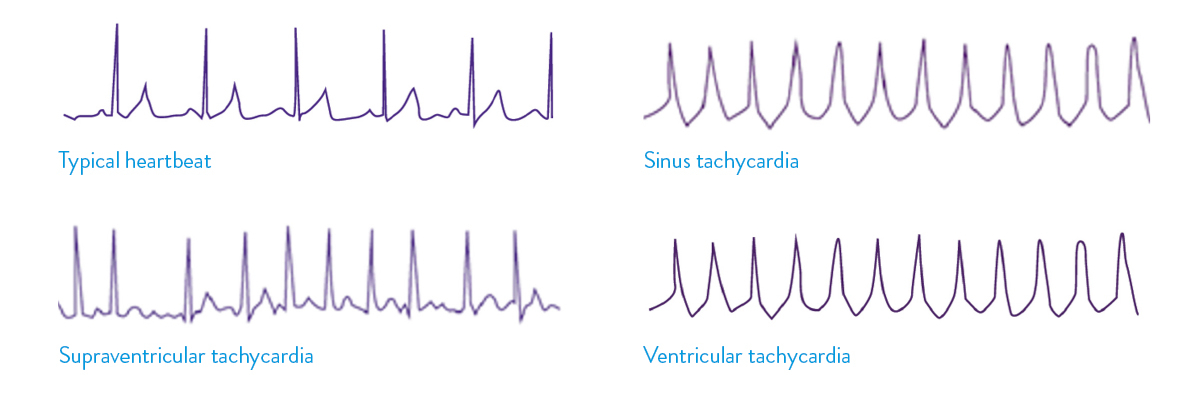
A tachycardia is a type of abnormal heart rhythm (an arrhythmia) greater than 100 beats/minute.2–5 There are four different types of tachycardia:
- Sinus tachycardia starts from the sinus node and is the most common kind of tachycardia where the heart rhythm is going slightly faster than normal.2,5 It can affect anyone due to exercise, anxiety, fever, or dehydration.5
- Supraventricular tachycardia is a fast but usually regular heart rhythm that starts in the atria or atrioventricular (AV) nodes.2,3
- Atrial tachycardia originates outside the sinus node region and can be caused by focal pacemaker activity (automaticity or triggered) or re-entry (microreentry or macroreentry).6
- Ventricular tachycardia originates in the ventricles and can significantly impair cardiac output, making it a potentially life‑threatening arrhythmia.2,4
LEARN MORE:
TYPES OF TACHYCARDIA
Connext
TV
TV
TV

The role of CRT - Carsten Israel

Optimising High Voltage Device Programming
References
- NHS. Heart rhythm problems (arrhythmia). Available at: www.nhs.uk/conditions/arrhythmia/. Accessed June 11, 2026.
- American Heart Association. Tachycardia: Fast heart rate. Available at: www.heart.org/en/health-topics/arrhythmia/about-arrhythmia/tachycardia--fast-heart-rate. Accessed June 11, 2026.
- Mayo Clinic. Supraventricular tachycardia – Symptoms and causes. Available at: www.mayoclinic.org/diseases-conditions/supraventricular-tachycardia/symptomscauses/ syc-20355243. Accessed June 11, 2026.
- Mayo Clinic. Ventricular tachycardia – Symptoms and causes. Available at: www.mayoclinic.org/diseases-conditions/ventricular-tachycardia/symptoms-causes/syc- 20355138. Accessed June 11, 2026.
- Cleveland Clinic. Sinus tachycardia: Causes, symptoms & treatment. Available at: my.clevelandclinic.org/health/diseases/23210-sinus-tachycardia. Accessed June 11, 2026.
- Issa Z, Miller J, Zipes D. (2012). Clinical Arrhythmology and Electrophysiology, 212–238. Philadelphia, PA: Saunders Elsevier.