

CARDIOVERTER
DEFIBRILLATORS
Designed to continuously monitor patients’ heart rhythm
and detect irregular heartbeats, implantable cardioverter
defibrillators (ICDs) deliver electrical signals and controlled shocks
in order to restore a normal heart rhythm when necessary.
OUR COMMITMENT
At Abbott, we are concerned with improving your patients’ safety, comfort and quality of life and have implemented several ICD technologies to meet their needs. Our ICDs elevate the standard of patient care through new algorithms and technology intended to improve patient safety and therapy assurance.
DISCOVER THE ICD RANGE
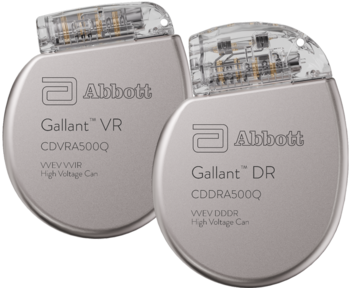
GALLANT™ ICDs
The Gallant™ ICD offers built-in smartphone connectivity with our latest patient-focused enhancements you can intuitively program to meet your patients’ changing needs.
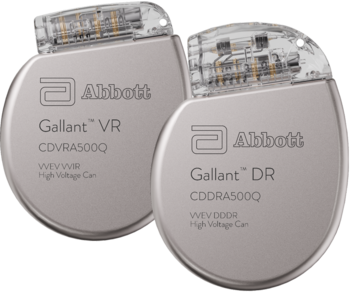
ENTRANT™ ICDs
The Entrant™ ICD integrates smartphone connectivity with long-lasting therapy in a small, contoured design that is 1.5 Tesla (T) and 3T Magnetic Resonance (MR) Conditional.*
FIND OUT MORE ABOUT:
GALLANT™ AND ENTRANT™ ICDs OFFER:

RIGHT ENERGY. RIGHT TIME. FOR GREATER FIRST-SHOCK SUCCESS1
Timing is everything when shocking a patient out of ventricular fibrillation (VF). Precision Shock Technology (PST) delivers the right energy within the right time for greater first-shock success.1–9 Any energy outside this response window is wasted.
LEARN MORE ABOUT PST:
VENTRICULAR FIBRILLATION (VF) THERAPY ASSURANCE DECREASES TIME TO TREATMENT FOR ARRHYTHMIAS IN PATIENTS WHO ARE LIKELY TO BE HEMODYNAMICALLY UNSTABLE

VF Therapy Assurance is the only technology to provide an additional safety net for difficult-to-detect ventricular arrhythmias. Without VF Therapy Assurance, ventricular tachyarrhythmias with low and varying signal amplitudes may not be successfully identified.10,11
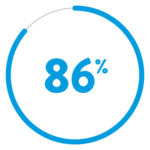
of patients who received high-voltage (HV) therapy due to VF Therapy Assurance’s enhanced detection would have been otherwise untreated for potentially life-threatening arrhythmias.10
OPTIMIZED PRECISION SHOCK TECHNOLOGY OFFERS NONINVASIVE PROGRAMMING OPTIONS TO OPTIMIZE RESCUE THERAPY TO EACH PATIENT’S UNIQUE PHYSIOLOGY AND CHANGING CONDITIONS
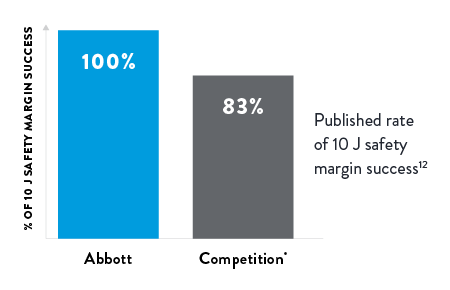
OPTIMIZED PRECISION SHOCK TECHNOLOGY is the industry’s most flexible option for the management of high defibrillation threshold (DFT). The algorithm supports a 10 Joules (J) shock safety margin for patients.12

- Enables smartphone connectivity through data encryption
- Compatible with the myMerlinPulse™ app

ABBOTT’S EXCLUSIVE NO-WAIT 1.5T AND 3T MAGNETIC RESONANCE IMAGING (MRI) OPTIONS ENSURE YOUR PATIENTS CAN GET THE SCANS THEY NEED, WHEN THEY NEED IT‡
Patients can access full-body 1.5 T and 3T MRI scans immediately after implant, allowing them to receive appropriate medical care as soon as it is needed.

TV
TV
MORE-CRT MPP Video
Video Pfeiffer and markus Stühlinger
Video Pedro Marques + Ana Bernardes
The role of CRT - Carsten Israel
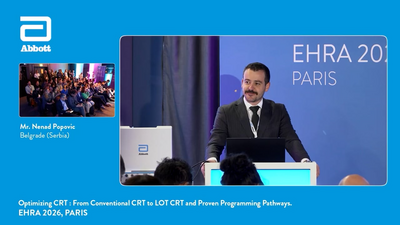
Optimizing CRT: From Conventional to LOT CRT
- Katcher M, Davis K, Badie N, et al. Improved ICD Shock Efficacy using Programmable Pulse Width. Presented at: Heart Rhythm Society; April 24-27, 2025.
- Swerdlow CD, Brewer JE, Kass RM, et al. Application of models of defibrillation to human defibrillation data: implications for optimizing implantable defibrillator capacitance. Circulation. 1997;96(9):2813-22. doi: 10.1161/01.cir.96.9.2813.
- Ellenbogen K, Wilkoff G, Kay G, et al. (2007). Clinical Cardiac Pacing, Defibrillation, and Resynchronization Therapy (3rd ed.). Elsevier Saunders; 542-547. ISBN-13: 978-1- 4160-2536-8.
- Kawata U, Birgersdotter-Green U. (2018). Ventricular Fibrillation and Defibrillation, Encyclopedia of Cardiovascular Research and Medicine. Elsevier, 674-682. ISBN 9780128051542. doi: 10.1016/B978-0-12-809657-4.99764-3.
- Efimov I, Kroll M, Tchou P. (2009). Cardiac Bioelectric Therapy. Springer, 468-472. ISBN 978-0-387-79403-7.
- Kroll M, Lehmann M. (1996). Implantable Cardioverter Defibrillator Therapy. Kluwher Academic Publishers, 68-69.
- Gold MR, Shorofsky SR. Strength-duration relationship for human transvenous defibrillation. Circulation. 1997;96(10):3517-20. doi: 10.1161/01.cir.96.10.3517.
- Kroll MW, Swerdlow CD. Optimizing defibrillation waveforms for ICDs. J Interv Card Electrophysiol. 2007;18(3):247-63. doi: 10.1007/s10840-007-9095-z.
- Doshi SK, Pittaro MD, Reeves R, et al. Efficacy of tuned waveforms based on different membrane time constants on defibrillation thresholds: primary results from the POWER trial. Pacing Clin Electrophysiol. 2012;35(10):1253-61. doi: 10.1111/j.1540-8159.2012.03500.x.
- Wilkoff BL, Sterns LD, Katcher MS, et al. Novel Ventricular Tachyarrhythmia Detection Enhancement Detects Undertreated Life-Threatening Arrhythmias. Heart Rhythm 02. 2021;3(1):70-78. doi: 10.1016/j.hroo.2021.11.0092021.
- Stroobandt RX, Duytschaever MF, Strisciuglio T, et al Failure to detect life-threatening arrhythmias in ICDs using single-chamber detection criteria. Pacing Clin Electrophysiology. 2019;42:583-594. doi:10.1111/pace.13610.3.
- Gabriels J, Budzikowski AS, Kassotis JT. Defibrillation waveform duration adjustment increases the proportion of acceptable defibrillation thresholds in patients implanted with single-coil defibrillation leads. Cardiology. 2013;124(2):71-75. doi: 10.1159/000345776.
™ indicates a trademark of the Abbott group of companies.
Bluetooth® and the Bluetooth® logo are registered trademarks of Bluetooth® SIG, Inc.