

RESYNCHRONIZATION
THERAPY DEVICES
Cardiac resynchronization therapy (CRT) is a proven
clinical treatment for heart failure management.
BETTER MANAGEMENT OF HF SYMPTOMS
We designed our groundbreaking quadripolar technology to enable improved management and outcomes for heart failure (HF) patients. With four electrodes and up to 14 pacing configurations, the quadripolar system enables left ventricular (LV) pacing at the preferred site without compromising lead stability, for better management of heart failure patients.7
HF patients who undergo implantation of unipolar and bipolar CRT devices may experience challenges such as phrenic nerve stimulation, high pacing thresholds and non-response to CRT therapy.8 Managing these challenges can result in longer implant times and surgical revisions.
Quadripolar technology can help overcome these challenges by offering more pacing flexibility without compromising lead stability.
Patients who do not respond to CRT using standard biventricular pacing (BiVP) are at a higher risk of death and heart failure (HF) hospitalizations and cause high healthcare expenditures, compared with CRT responders.2–4 It is estimated that 30–40% of CRT patients are non-responders.5
In a secondary analysis of the MORE-CRT MPP trial, MultiPoint™ pacing (MPP) showed superior outcomes as compared to BiVP in CRT non-responders in all patient populations including high-risk subgroups.6
READ MORE ABOUT:
HIGH-RISK PATIENT SUBGROUPS6

Ischemic cardiomyopathy
Very wide QRS (≥160 ms)
Long interventricular electrical delay (>105 ms)
Hub
TV
MORE-CRT MPP Video
Video Pfeiffer and markus Stühlinger

Video Pedro Marques + Ana Bernardes

The role of CRT - Carsten Israel
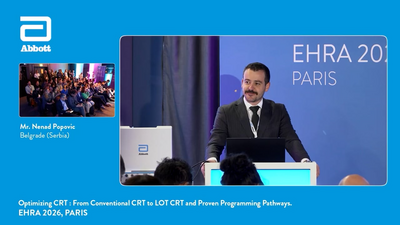
Optimizing CRT: From Conventional to LOT CRT
- Avant™, Neutrino™ NxT, Gallant™, Entrant™ Manual. ARTEN600342965_C. February 20, 2026.
- Varma N, Boehmer J, Bhargava K, et al. Evaluation, Management, and Outcomes of Patients Poorly Responsive to Cardiac Resynchronization Device Therapy. J Am Coll Cardiol. 2019;74(21):2588-2603. doi: 10.1016/j.jacc.2019.09.043.
- R Rickard J, Cheng A, Spragg D, et al. Durability of the survival effect of cardiac resynchronization therapy by level of left ventricular functional improvement: fate of “nonresponders”. Heart Rhythm. 2014;11(3):412-6. doi: 10.1016/j.hrthm.2013.11.025.
- Varma N, Auricchio A, Connolly AT, et al. The cost of non-response to cardiac resynchronization therapy: characterizing heart failure events following cardiac resynchronization therapy. Europace. 2021;23(10):1586-1595. doi: 10.1093/europace/euab123.
- Chung ES, Leon AR, Tavazzi L, et al. Results of the Predictors of Response to CRT (PROSPECT) trial. Circulation. 2008;117(20):2608-16. doi: 10.1161/ CIRCULATIONAHA.107.743120.
- Leclercq C, Burri H, Calò L, et al. Multipoint pacing is associated with reduction of heart failure hospitalizations or death in patients who do not respond to cardiac resynchronization therapy: results of the MORE-CRT MPP randomized trial. Europace. 2025;27(6):euaf070. doi: 10.1093/europace/euaf070.
- Data compiled from clinical study results, on file in Report 60034670.
- Thibault B, Dubuc M, Guerra PG, et al. Electrode selection to avoid phrenic stimulation with a quadripolar left heart lead. Heart Rhythm. 2011;8(5): S68. doi: 10.1016/j.hrthm.2011.03.023.