

CARDIAC
RESYNCHRONIZATION
THERAPY DEVICES
RESYNCHRONIZATION
THERAPY DEVICES
Cardiac resynchronization therapy (CRT) is a proven
clinical treatment for heart failure management.
INDICATIONS FOR USE1
CRT devices are indicated for reduction of symptoms in adult patients who have congestive heart failure, a reduced left ventricular ejection fraction (LVEF) and a prolonged QRS duration.
CRT defibrillator (CRT-D) devices are indicated in adult patients who meet the CRT indications and have already survived a cardiac arrest or are at a high risk of sudden cardiac death (SCD) due to ventricular tachycardia (VT) or ventricular fibrillation (VF).*
CRT-Ds are most commonly implanted within a device pocket in the pectoral region.
LEARN MORE ABOUT:
Connext
Hub
Hub
TV
MORE-CRT MPP Video
Video Pfeiffer and markus Stühlinger
Video Pedro Marques + Ana Bernardes
The role of CRT - Carsten Israel
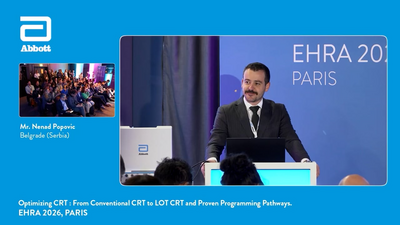
Optimizing CRT: From Conventional to LOT CRT
References
- Avant™, Neutrino™ NxT, Gallant™, Entrant™ Manual. ARTEN600342965_C. February 20, 2026.
- Varma N, Boehmer J, Bhargava K, et al. Evaluation, Management, and Outcomes of Patients Poorly Responsive to Cardiac Resynchronization Device Therapy. J Am Coll Cardiol. 2019;74(21):2588-2603. doi: 10.1016/j.jacc.2019.09.043.
- R Rickard J, Cheng A, Spragg D, et al. Durability of the survival effect of cardiac resynchronization therapy by level of left ventricular functional improvement: fate of “nonresponders”. Heart Rhythm. 2014;11(3):412-6. doi: 10.1016/j.hrthm.2013.11.025.
- Varma N, Auricchio A, Connolly AT, et al. The cost of non-response to cardiac resynchronization therapy: characterizing heart failure events following cardiac resynchronization therapy. Europace. 2021;23(10):1586-1595. doi: 10.1093/europace/euab123.
- Chung ES, Leon AR, Tavazzi L, et al. Results of the Predictors of Response to CRT (PROSPECT) trial. Circulation. 2008;117(20):2608-16. doi: 10.1161/ CIRCULATIONAHA.107.743120.
- Leclercq C, Burri H, Calò L, et al. Multipoint pacing is associated with reduction of heart failure hospitalizations or death in patients who do not respond to cardiac resynchronization therapy: results of the MORE-CRT MPP randomized trial. Europace. 2025;27(6):euaf070. doi: 10.1093/europace/euaf070.
- Data compiled from clinical study results, on file in Report 60034670.
- Thibault B, Dubuc M, Guerra PG, et al. Electrode selection to avoid phrenic stimulation with a quadripolar left heart lead. Heart Rhythm. 2011;8(5): S68. doi: 10.1016/j.hrthm.2011.03.023.