

RESYNCHRONIZATION
THERAPY DEVICES
Cardiac resynchronization therapy (CRT) is a proven
clinical treatment for heart failure management.
PRECISION SHOCK TECHNOLOGY
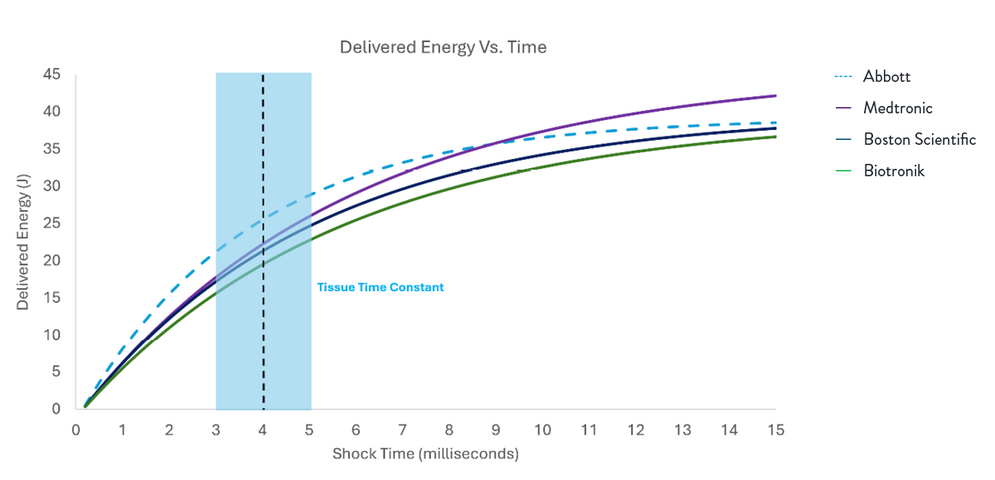
Timing is everything when shocking a patient out of ventricular fibrillation (VF). Precision Shock Technology delivers the right energy within the right time for greater first-shock success.1–9
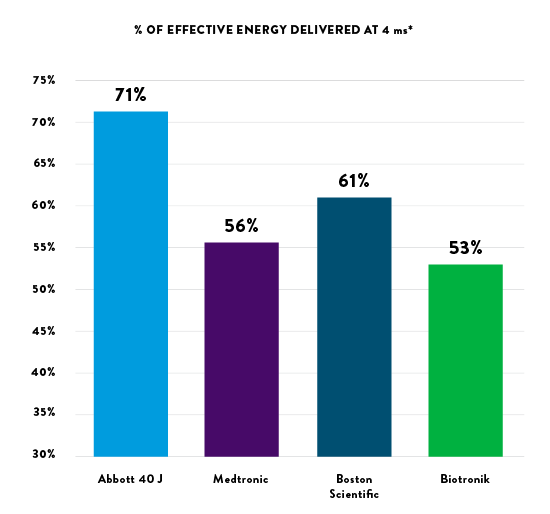
Energy delivered within the tissue time constant of 3–5 ms is the most effective for conversion.1-4 Any energy outside this response window is wasted.
Even at 36 J first shock, Abbott CRT-Ds deliver more energy at the right time.
Every patient deserves life-changing therapy. Abbott’s next generation cardiac resynchronization therapy defibrillator (CRT-D) solutions make it possible for you to achieve clinically meaningful outcomes:
SyncAV™ CRT technology offers dynamic atrioventricular (AV) timing to ensure electrical resynchronization.
100% of patients had a narrower QRS when SyncAV™ CRT technology was optimized12
- CRT-induced QRS narrowing has been shown to improve clinical outcomes for heart failure patients13,14
22% fewer heart failure (HF) hospitalizations for patients with SyncAV™ CRT technology enabled vs. patients with the technology disabled15
SyncAV™ CRT technology delivers nearly 2x the median acute QRSd duration improvement compared to off-the-shelf atrioventricular (AV) delays, regardless of pacing mode.16 HF hospitalization rates significantly reduce by 22% at 2 years with SyncAV™ CRT technology ON vs OFF.15

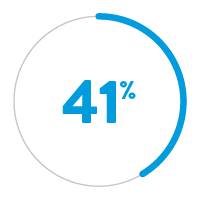
41% reduction in heart failure readmissions17

34% reduction in all-cause hospitalization readmissions17

23% reduction ($1,135) in 2-year cost17
$4,031
lifetime savings per CRT patient17
Hub
TV
MORE-CRT MPP Video
Video Pfeiffer and markus Stühlinger

Video Pedro Marques + Ana Bernardes

The role of CRT - Carsten Israel
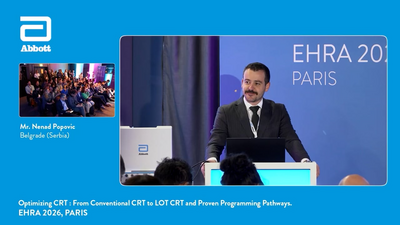
Optimizing CRT: From Conventional to LOT CRT
- Swerdlow CD , Brewer JE, Kass RM, et al. Application of models of defibrillation to human defibrillation data: implications for optimizing implantable defibrillator capacitance. Circulation. 1997;96(9):2813-22. doi: 10.1161/01.cir .96.9.2813.
- Ellenbogen K, Wilkoff G, Kay G, et al. (2007). Clinical Cardiac Pacing, Defibrillation, and Resynchronization Therapy (3rd ed.). Elsevier Saunders; 542-547. ISBN-13: 978-1- 4160-2536-8.
- Kawata U , Birgersdotter-Green U . (2018). Ventricular Fibrillation and Defibrillation, Encyclopedia of Cardiovascular Research and Medicine. Elsevier, 674-682. ISBN 9780128051542. doi: 10.1016/B978-0-12- 809657-4.99764-3.
- Efimov I, Kroll M, Tchou P . (2009). Cardiac Bioelectric Therapy. Springer, 468-472. ISBN 978-0-387-79403-7.
- Kroll M, Lehmann M. (1996). Implantable Cardioverter Defibrillator Therapy. Kluwher Academic Publishers, 68-69.
- Gold MR, Shorofsky SR. Strength-duration relationship for human transvenous defibrillation. Circulation. 1997;96(10):3517-20. doi: 10.1161/01.cir .96.10.3517.
- Kroll MW , Swerdlow CD . Optimizing defibrillation waveforms for ICDs. J Interv Card Electrophysiol. 2007;18(3):247-63. doi: 10.1007/s10840-007-9095-z.
- Doshi SK, Pittaro MD , Reeves R, et al. Efficacy of tuned waveforms based on different membrane time constants on defibrillation thresholds: primary results from the POWER trial. Pacing Clin Electrophysiol. 2012;35(10):1253-61. doi: 10.1111/j. 1540-8159.2012.03500.x.
- Katcher M, Davis K, Badie N, et al. Improved ICD Shock Efficacy using Programmable Pulse Width. Presented at: Heart Rhythm Society; April 24-27, 2025.
- Abbott IFU (Gallant™) (ARTEN600312644 A) , Medtronic IFU (Cobalt‡ ): (M029527C001), Boston Scientific IFU (Resonate‡ , Perciva‡ , Charisma‡ , Viglant‡ , and Momentum‡ ):, Biotronik technical manual (Rivacor‡ ) (439133, Rev. C).
- Leclercq C, Burri H, Calò L, et al. Multipoint pacing is associated with reduction of heart failure hospitalizations or death in patients who do not respond to cardiac resynchronization therapy: results of the MORE-CRT MPP randomized trial. Europace. 2025;27(6):euaf070. doi: 10.1093/europace/euaf070.
- Varma N, O’Donnell D, Bassiouny M, et al. Programming Cardiac Resynchronization Therapy for Electrical Synchrony: Reaching Beyond Left Bundle Branch Block and Left Ventricular Activation Delay. J Am Heart Assoc. 2018;7(3):e007489. doi: 10.1161/JAHA.117.007489.
- Appert L, Menet A, Altes A, et al. Clinical Significance of Electromechanical Dyssynchrony and QRS Narrowing in Patients With Heart Failure Receiving Cardiac Resynchronization Therapy. Can J Cardiol. 2019;35(1):27-34. doi: 10.1016/j.cjca.2018.10.019.
- Okafor O, Leyva F, Zegard A, et al. Changes in QRS Area and QRS Duration After Cardiac Resynchronization Therapy Predict Cardiac Mortality, Heart Failure Hospitalizations, and Ventricular Arrhythmias. J Am Heart Assoc. 2019;8:e013539. doi:10.1161/JAHA.119.013539.
- Varma N, et al. Gain in CRT Efficacy with Dynamic Electrical Optimization: Real World Effect of SyncAV™ CRT on Heart Failure Hospitalizations. Poster presented at European Heart Rhythm Association; May 2020.
- Thibault B, Waddingham P, Badie N, et al. Acute Electrical Synchronization Achieved With Dynamic Atrioventricular Delays During Biventricular and Left Ventricular MultiPoint Pacing. CJC Open. 2024;7(2):166-175. doi: 10.1016/j.cjco.2024.11.003.
- Varma N, Hu Y, Connolly AT, et al. Gain in real-world cardiac resynchronization therapy efficacy with SyncAV dynamic optimization: Heart failure hospitalizations and costs. Heart Rhythm. 2021;18(9):1577-1585. doi:10.1016/j.hrthm.2021.05.006.
- Corbisiero R, Kazemian P, Bharmi R, et al. Less with More: Hospitalization Cost and Event Rates with Quadripolar versus Bipolar CRT-D System. Pacing Clin Electrophysiol. 2016;39(10):1038-1045. doi: 10.1111/pace.12923.
- Forleo GB, Di Biase L, Bharmi R, et al. Hospitalization rates and associated cost analysis of cardiac resynchronization therapy with an implantable defibrillator and quadripolar vs. bipolar left ventricular leads: a comparative effectiveness study. Europace. 2015;17(1):101-7. doi: 10.1093/europace/euu290.
- Graham CM, Gayle J, Magee G. Comparison of healthcare utilization and hospital costs for quadripolar versus bipolar LV lead technologies. Presented at: Heart Rhythm Society; May, 2014; San Francisco, CA.
- Mehta PA, Shetty AK, Squirrel M, et al. Elimination of phrenic nerve stimulation occurring during CRT: follow-up in patients implanted with a novel quadripolar pacing lead. J Interv Card Electrophysiol. 2012;33(1):43-9. doi: 10.1007/s10840-011-9598-5.
- Viani SM, Segreti L, Di Cori A, et al. A new quadripolar lead for left ventricular pacing: Short term reliability and future opportunities. Europace. 2011;13(Suppl.3).
- Turakhia MP, Cao M, Fischer A, et al. Reduced Mortality Associated With Quadripolar Compared to Bipolar Left Ventricular Leads in Cardiac Resynchronization Therapy. JACC Clin Electrophysiol. 2016;2(4):426-433. doi: 10.1016/j.jacep.2016.02.007.
- Pappone C, et al. Left ventricular pacing from a site of late electrical activation improves acute hemodynamic response to cardiac resynchronization therapy. Presented at: Asia Pacific Heart Rhythm Society; Oct, 2012; Taipei, Taiwan.
- Gutleben KJ, Kranig W, Barr C, et al. LV-pacing: Vector optimization using a novel quadripolar electrode acutely improves cardiac output in cardiac resynchronization therapy patients. Europace. 2011:13(3), P403.
- Turakhia MP, Gold MR, Fischer A, et al. Decreased rate of left ventricular lead deactivation and replacement associated with use of quadripolar LV leads. EP Europace. 2013:15(Suppl. 2): S47. doi: 10.1093/europace/eut169.
- Manyam H, Bhimani AA, Sadrpour SA, et al. Quadripolar left ventricular leads yield lower capture thresholds with expected increase in battery longevity. Heart Rhythm. 2013;10(5):S228. doi: 10.1016/j.hrthm.2013.03.019.
™ indicates a trademark of the Abbott group of companies.
‡ Indicates a third-party trademark, which is property of its respective owner.