

Bradycardia represents a heterogeneous group of sinus node and atrioventricular conduction disorders resulting from impaired impulse formation and/or propagation. Clinical relevance is determined by the underlying substrate, degree of conduction system disease, and associated hemodynamic impact, with advanced bradyarrhythmias contributing to syncope, heart failure syndromes, and malignant bradyasystolic events.
CURRENT GUIDELINES (ESC/HRS) ON CONDUCTION SYSTEM PACING AND RELEVANCE OF FUSION PACING
Learn about the practical issues of conduction system pacing from this video which discusses the 2023 European Heart Rhythm Association (EHRA) clinical consensus statement.1
See also the 2025 European Society of Cardiology (ESC) clinical consensus statement.2
Classification of documented and suspected bradyarrhythmias:
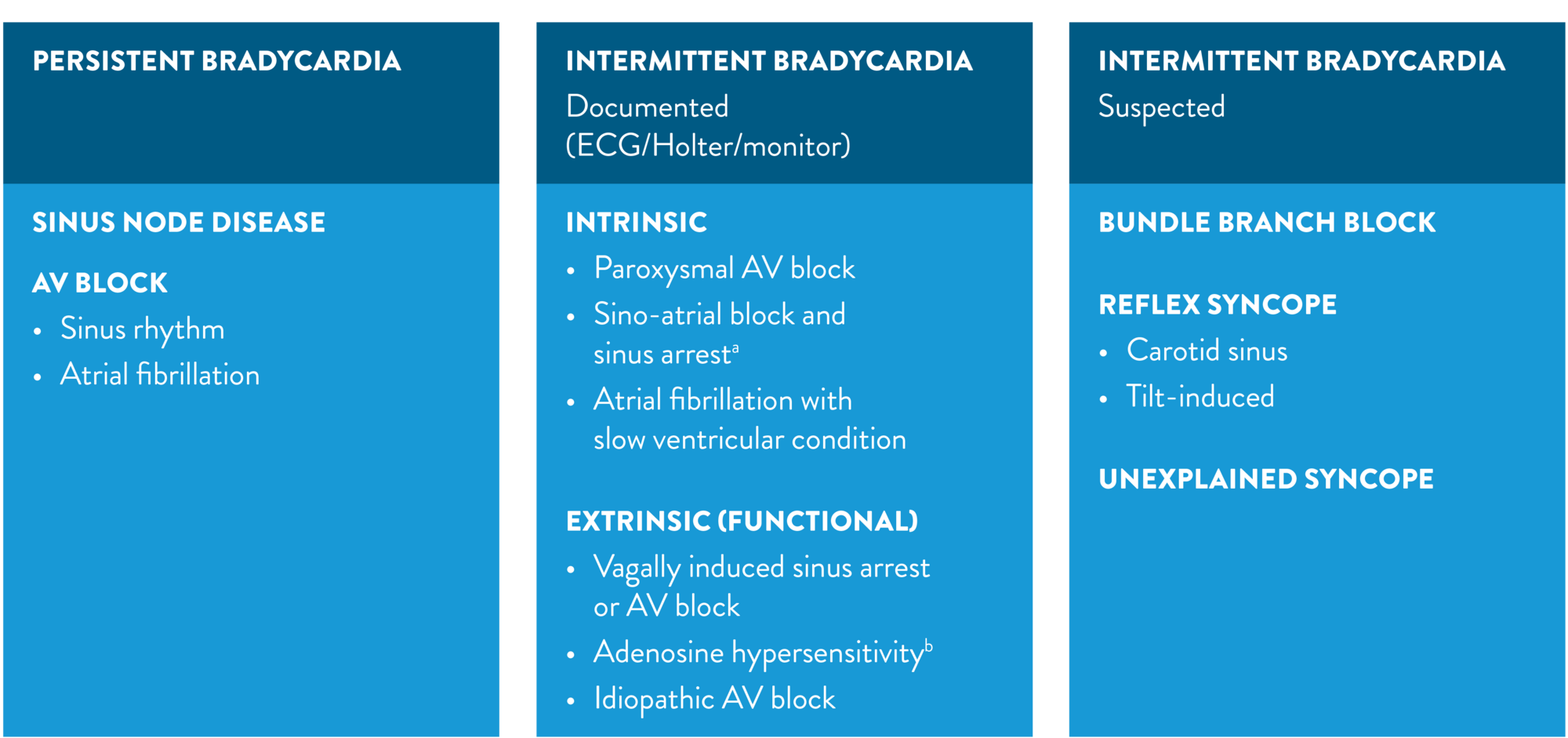
A careful history and physical examination are essential for the evaluation of patients with suspected or documented bradycardia.
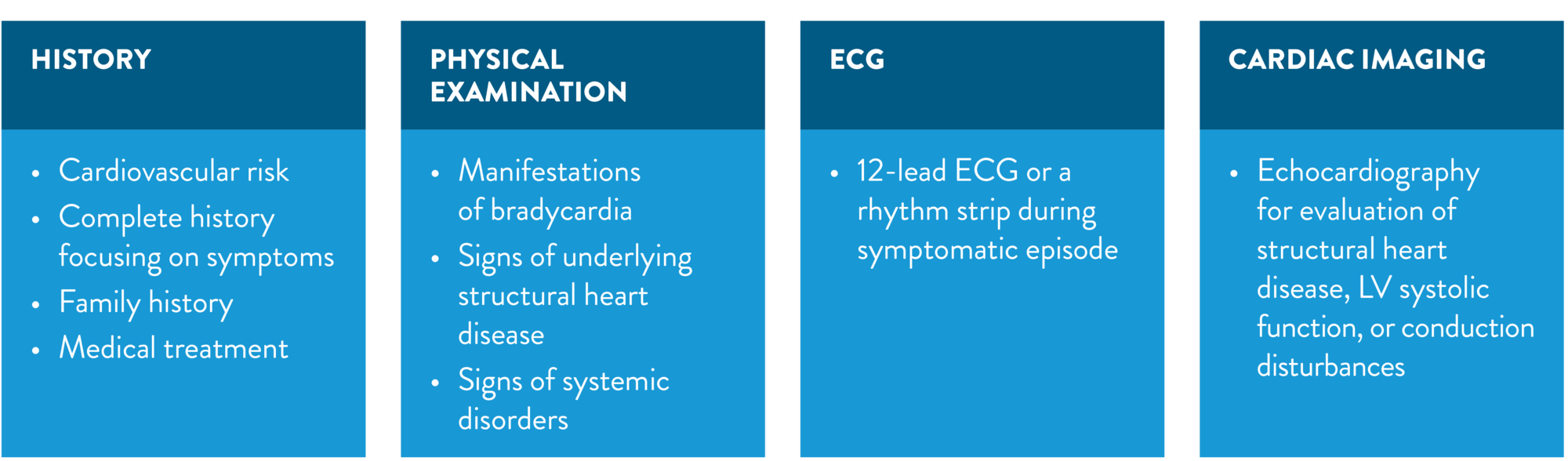
Current guidelines emphasize the importance of the history and physical examination in the initial evaluation, particularly for identifying patients with structural heart disease.
The evaluation of patients with suspected or documented bradycardia:
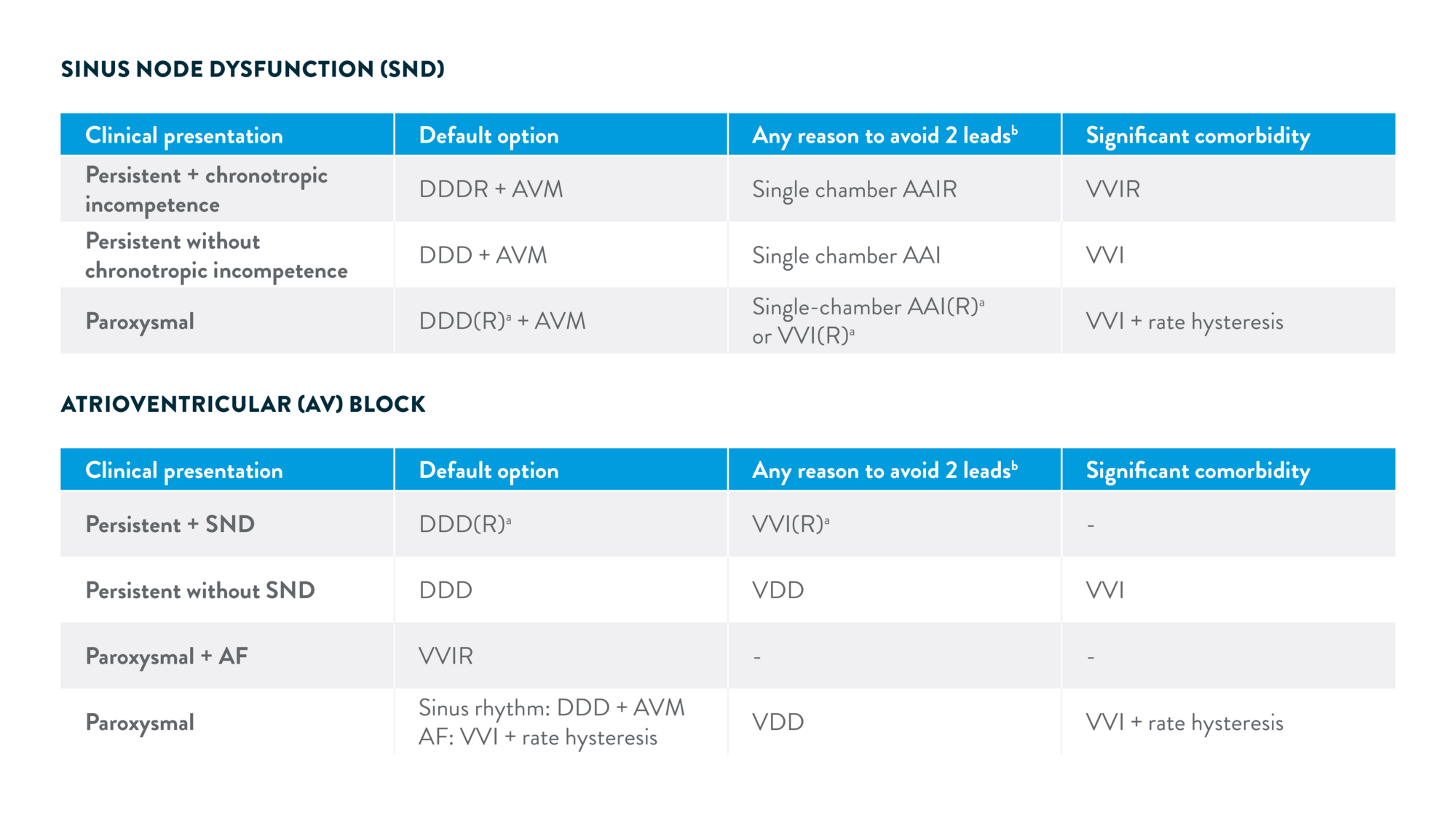
Optimal pacing mode and algorithm selection in sinus node dysfunction (SND) and atrioventricular (AV) block:
Hub
TV

Understanding AVEIR VR Retrieval

Why Leadless Pacing Summit 2026 Matters

AVEIR Atrial LP AAI Implant Training Supplement

AVEIR DR Virtual Implant Training Supplement
Leadless in Congenital Patients
When Patients Evolve: Upgradability in Leadless

Optimizing Tricuspid Valve Crossing: Case example

Optimizing Tricuspid Valve Crossing: Case example

Health Economics of Leadless Therapy
No Wait MRI, an Assurity MRI™ patient story
AAI, atrial pacing; AAIR, atrial pacing rate response; AF, atrial fibrillation; AV, atrioventricular; AVM, atrioventricular management [i.e. AV delay programming (avoiding values >230 ms) or specific algorithms to avoid/reduce unnecessary ventricular pacing]; BBB, bundle branch block; DDD, dual-chamber pacing; DDDR, dual-chamber pacing rate response; ECG, electrocardiogram; ESC, European Society of Cardiology; SND, sinus node dysfunction; VDD, ventricular pacing with atrial sensing/tracking; VVI, single chamber ventricular pacing; VVIR, single chamber ventricular pacing rate response.
- Burri H, Jastrzebski M, Cano Ó, et al. EHRA clinical consensus statement on conduction system pacing implantation: endorsed by the Asia Pacific Heart Rhythm Society (APHRS), Canadian Heart Rhythm Society (CHRS), and Latin American Heart Rhythm Society (LAHRS). Europace. 2023;25(4):1208-1236. doi: 10.1093/europace/ euad043. Erratum in: Europace. 2023 Apr 15;25(4):1520. doi: 10.1093/europace/euad098.
- Glikson M, Burri H, Abdin A, et al. European Society of Cardiology (ESC) clinical consensus statement on indications for conduction system pacing, with special contribution of the European Heart Rhythm Association of the ESC and endorsed by the Asia Pacific Heart Rhythm Society, the Canadian Heart Rhythm Society, the Heart Rhythm Society, and the Latin American Heart Rhythm Society. Europace. 2025;27(4):euaf050. doi: 10.1093/europace/euaf050.
- Glikson M, Nielsen JC, Kronborg MB, et al. 2021 ESC Guidelines on cardiac pacing and cardiac resynchronization therapy. Eur Heart J. 2021;42(35):3427-3520. doi: 10.1093/eurheartj/ehab364. Erratum in: Eur Heart J. 2022 May 1;43(17):1651. doi: 10.1093/eurheartj/ehac075.
- Deharo JC, Brignole M, Guieu R. Adenosine hypersensitivity and atrioventricular block. Herzschrittmacherther Elektrophysiol 2018;29:166-170.