

AVEIR™ LEADLESS
PACEMAKERS
The only leadless solutions that can provide therapy
for all common pacemaker indications1,2,3
SECOND GENERATION DEVICE AVEIR™ AR2 ATRIAL LEADLESS PACEMAKER (LP):
+25%
more battery life
in all single/dual-chamber pacing modes without increasing device size.1*
INTRODUCING THE AVEIR™ AR2 ATRIAL LEADLESS PACEMAKER
ATRIAL LEADLESS PACING, ONLY AVAILABLE FROM AVEIR™ LPs
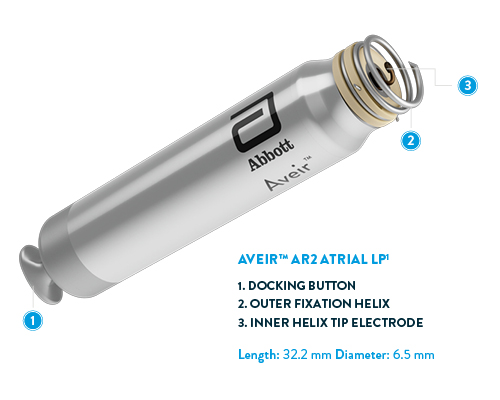
DUAL HELIX DESIGN FOR ATRIAL THERAPY1
- 1.63 mm inactive outer helix provides primary fixation
- Inner helix tip electrode provides stabilization of the tip electrode on the right atrial (RA) endocardium while enabling sensing, pacing, and mapping of electrical parameters
- Recommended implant site: base of the RA appendage
- 2nd generation AVEIR™ AR2 Atrial LP provides +25% more battery life in all single/dual chamber pacing modes without increasing device size1*
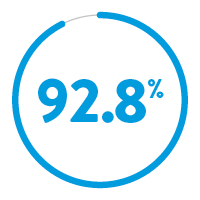
ELECTRICAL PERFORMANCE AT 12 MONTHS†
Patients with acceptable atrial device pacing capture threshold (≤ 3 V at 0.4 ms) and sensing amplitude (≥ 1 mV)9**
- 95.2% 3-month atrial composite success rate with modified sensing criteria (≥ 0.5 mV)11***
AVEIR™ AR2 LP IS IMPLANTED IN THE HEART THROUGH A MINIMALLY INVASIVE CATHETER PROCEDURE6
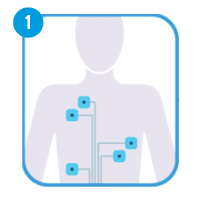
CONNECT patient’s skin electrodes to Merlin™ Patient Care System (PCS) Programmer via AVEIR™ Link Module
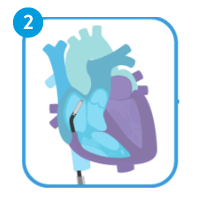
INSERT the LP via ergonomic catheter for minimally invasive procedure ensuring helix is fully covered during catheter navigation
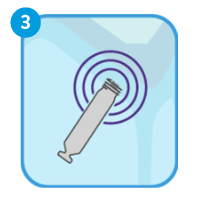
MAP atrial implanting location before fixation by touching endocardium with LP’s tip electrode
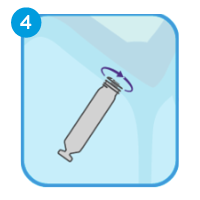
FIXATE the LP to the atrial endocardium
using the screw-in mechanism
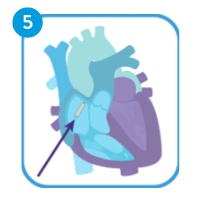
RELEASE the LP and withdraw
delivery catheter
AVEIR™ AR (SINGLE CHAMBER)12
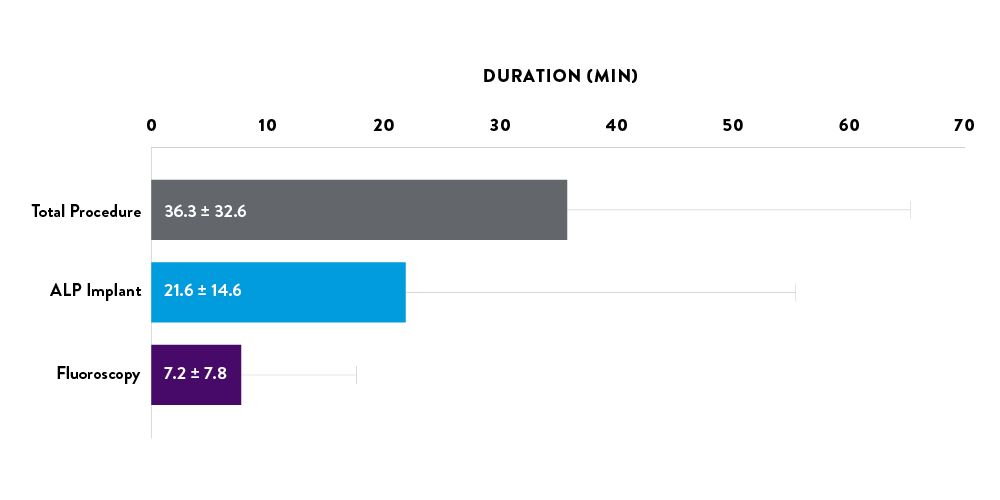
- Total procedure time: 36 ± 33 min
- Fluoroscopy time: 7 ± 8 min
- Repositioning: Avoided in 95% of cases (due to pre-fixation mapping)
- Implant success: 100% (92% de novo implants)
PROCEDURE DURATION12

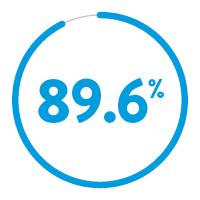
Patients with successful atrial implants with 1 or less repositioning attempts7
100% SUCCESS LONG-TERM ATRIAL DEVICE RETRIEVALS13

Patients with successful atrial device retrieval procedures
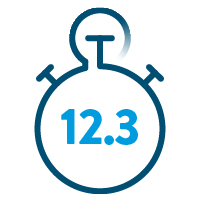
12.3 ± 9.2 average minutes retrieval procedure time
STUDY INFORMATION

8 operators across
8 global sites

23.5 ± 6.6 average months
from implant to retrieval

10 patients

6 patients successfully received new AVEIR™ atrial device replacements. 2 patients received transvenous (TV) pacemakers. 2 received cardiac resynchronization therapy (CRT) devices.
INDEPENDENT ATRIAL PACING MODE LONGEVITIES1,6
AVEIR™ AR2 ATRIAL DEVICE
Parameters: AAI(R) / AAI(R)+VVI†, 50 bpm, 300 Ω,
model LSP203A
LONGEVITY* (YEARS)
Pulse width
| % PACING | PACE AMPLITUDE | 0.25 ms | 0.4 ms | 0.8 ms |
|---|---|---|---|---|
| 0% | 2.5 V | 23.1 | 23.1 | 23.1 |
| 50% | 1.5 V | 18.0 | 16.1 | 13.4 |
| 2.5 V | 13.0 | 10.6 | 7.8 | |
| 100% | 1.5 V | 14.7 | 12.4 | 9.4 |
| 2.5 V | 9.0 | 6.9 | 4.6 |
TV
TV
Understanding AVEIR VR Retrieval

Why Leadless Pacing Summit 2026 Matters
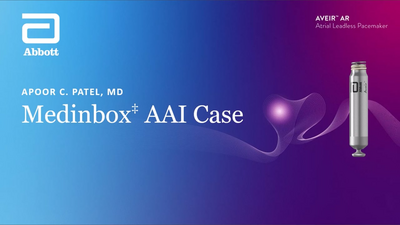
AVEIR Atrial LP AAI Implant Training Supplement
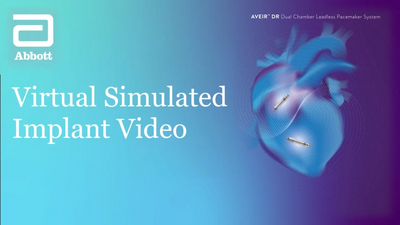
AVEIR DR Virtual Implant Training Supplement
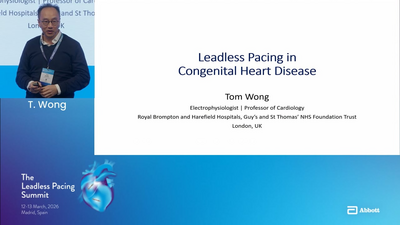
Leadless in Congenital Patients
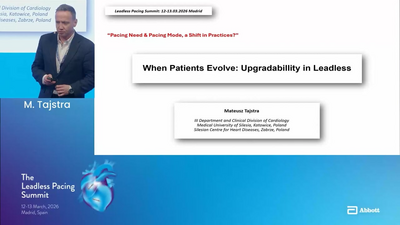
When Patients Evolve: Upgradability in Leadless

Optimizing Tricuspid Valve Crossing: Case example
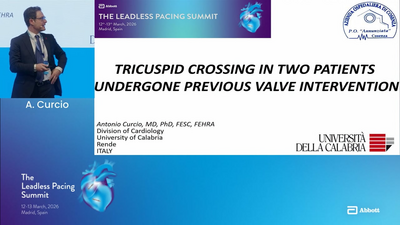
Optimizing Tricuspid Valve Crossing: Case example

Health Economics of Leadless Therapy

Learn AVEIR Leadless Pacemaker Follow-Up Checks
- AVEIR™ Leadless Pacemakers and Delivery Catheter IFU. ARTEN600361108.
- Micra‡ VR2 MC2VR01 IFU.
- Micra‡ AV2 MC2AVR1 IFU.
- Glikson M, Nielsen JC, Kronborg MB, et al. 2021 ESC Guidelines on cardiac pacing and cardiac resynchronization therapy. Eur Heart J. 2021;42(35):3427-3520. doi: 10.1093/eurheartj/ehab364. Erratum in: Eur Heart J. 2022 May 1;43(17):1651. doi: 10.1093/eurheartj/ehac075.
- Kusumoto FM, Schoenfeld MH, Barrett C, et al. 2018 ACC/AHA/HRS Guideline on the Evaluation and Management of Patients With Bradycardia and Cardiac Conduction Delay: Executive Summary: A Report of the American College of Cardiology/American Heart Association Task Force on Clinical Practice Guidelines, and the Heart Rhythm Society. J Am Coll Cardiol. 2019;74(7):932-987. doi: 10.1016/j.jacc.2018.10.043. Erratum in: J Am Coll Cardiol. 2019;74(7):1014-1016. doi: 10.1016/j.jacc.2019.06.046.
- AVEIR Leadless Pacemakers and Delivery Catheter IFU. ARTEN600175957; ARTEN600307044; ARTEN600361109.
- Knops RE, Reddy VY, Ip JE, et al. A Dual-Chamber Leadless Pacemaker. N Engl J Med. 2023;388(25):2360-2370. doi: 10.1056/NEJMoa2300080.
- Doshi RN, Ip JE, Defaye P, et al. Dual-chamber leadless pacemaker implant procedural outcomes: Insights from the AVEIR DR i2i study. Heart Rhythm. 2025;22(9):2391-2400. doi: 10.1016/j.hrthm.2025.03.1941.
- Knops RE, Ip JE, Doshi R, et al. One-Year Safety and Performance of a Dual-Chamber Leadless Pacemaker. Circ Arrhythm Electrophysiol. 2025;18(4):e013619. doi: 10.1161/CIRCEP.124.013619.
- Knops RE, Ip JE, Doshi R, et al. One-Year Safety and Performance of a Dual-Chamber Leadless Pacemaker. (Supplementary Appendix). Circ Arrhythm Electrophysiol. 2025;18(4):e013619. doi: 10.1161/CIRCEP.124.013619.
- Cantillon D, et al. Percutaneous implantation of a dual-chamber leadless cardiac pacemaker system with bidirectional communication for atrioventricular synchrony. Presented at: Heart Rhythm Society; May 19-21, 2023; New Orleans, USA.
- Nair DG, Lee KW, Badie N, et al. Atrial helix-fixation leadless pacemaker: real-world single-chamber implant experience. J Interv Card Electrophysiol. 2025;68(6):1319-1325. doi: 10.1007/s10840-025-02041-8.
- Ip J, Doshi R, et al. Chronic Retrieval Outcomes for an Atrial Leadless Pacemaker. Presented at: Heart Rhythm Society; Apr 25-27, 2025; San Diego, USA.
- Reddy VY, Exner DV, Doshi R, et al. Primary Results on Safety and Efficacy From the LEADLESS II-Phase 2 Worldwide Clinical Trial. JACC Clin Electrophysiol. 2022;8(1):115-117. doi: 10.1016/j.jacep.2021.11.002.
- Reddy, VY, et al. Worldwide Experience with Leadless Pacemaker Retrievals: A Worldwide Nanostim Experience out of 9y. Presented at: Asia Pacific Heart Rhythm Society; Nov 18-20, 2022; Singapore.
- Neuzil P, Exner DV, Knops RE, et al. Worldwide Chronic Retrieval Experience of Helix-Fixation Leadless Cardiac Pacemakers. J Am Coll Cardiol. 2025;85(11):1111-1120. doi: 10.1016/j.jacc.2024.10.094.
- AVEIR™ VR Leadless Pacemaker and Delivery Catheter IFU. ARTEN600384624.
- Reddy VY, Exner DV, Doshi R, et al. 1-Year Outcomes of a Leadless Ventricular Pacemaker: The LEADLESS II (Phase 2) Trial. JACC Clin Electrophysiol. 2023;9(7 Pt 2):1187-1189. doi: 10.1016/j.jacep.2023.01.031.
™ indicates a trademark of the Abbott group of companies.
‡ Indicates a third-party trademark, which is property of its respective owner.