

AVEIR™ LEADLESS
PACEMAKERS
The only leadless solutions that can provide therapy
for all common pacemaker indications1,2,3
PROVEN SAFETY IN REAL-WORLD POPULATIONS
DATA FROM ASIA PACIFIC HEART RHYTHM SOCIETY (APHRS) 2025
AVEIR™ DR PROVIDES SIGNIFICANT ADVANTAGES OVER TRANSVENOUS PACEMAKERS (TVPs)4
REAL-WORLD RESULTS FROM COMPARING 759 AVEIR™ DR PATIENTS WITH 77,422 TV PATIENTS
LOWER COMPLICATIONS
- 41% lower rate of overall complications compared to TVPs at 6 months (4.1% vs 6.9%, P<0.01)
- 52% lower rate of device-related complications for AVEIR™ DR compared to TVPs at 6 months (2.8% vs 5.9%, P<0.01
LOWER DEVICE REINTERVENTIONS
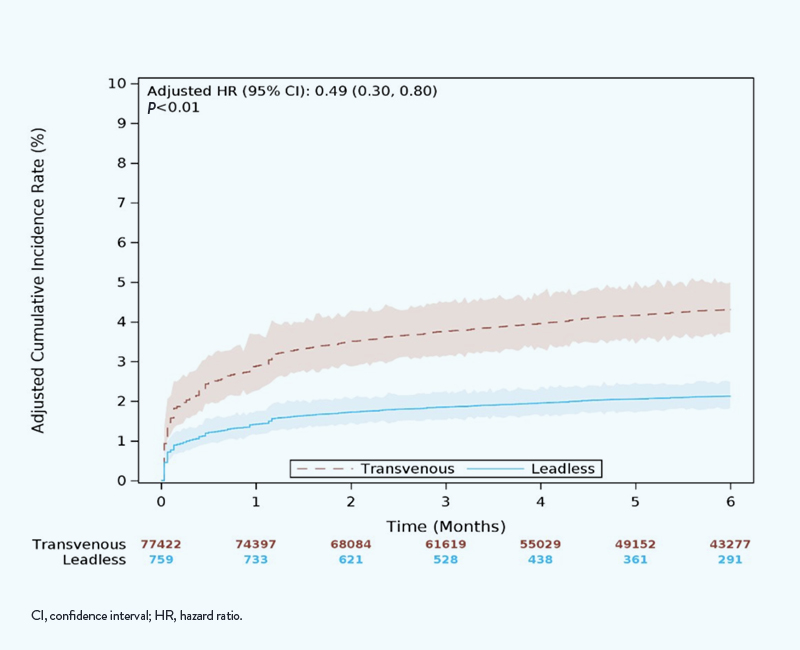
- 51% lower rate of overall device reinterventions for AVEIR™ DR compared to TVPs at 6 months (2.1% vs 4.3%, P<0.01)
COMPARABLE MORTALITY
- Comparable all-cause mortality over 30 days and 6 months in the AVEIR™ DR group
AVEIR™ DR LP SYSTEM IMPLANT-TO-IMPLANT (i2i™) STUDY MET 3-MONTH SAFETY AND EFFICACY ENDPOINTS AS HIGHLIGHTED IN THE NEW ENGLAND JOURNAL OF MEDICINE5
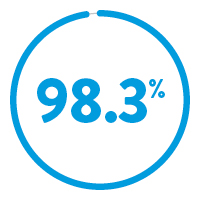
Patients with successful dualchamber procedures
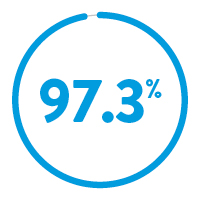
Patients achieved atrioventricular synchrony (AVS) performance endpoint
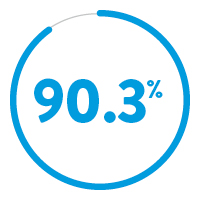
Patients free from system-related complications*
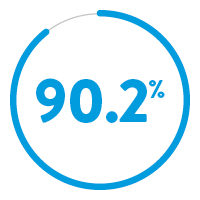
Patients with acceptable atrial device pacing capture threshold and sensing amplitude
FEW COMPLICATIONS OCCURRED BETWEEN 3 AND 6 MONTH FOLLOW-UP6
3 serious adverse device effects occurred between 90 and 180 days
- Threshold elevation
- Pre-syncope
- False magnet mode
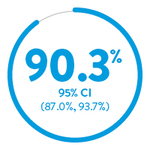
Patients free from system-related complications at 3 months*
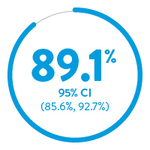
Patients free from system-related complications at 6 months*
The incidence of acute complications was similar to that observed in studies of transvenous dual-chamber pacemakers.7,8,9
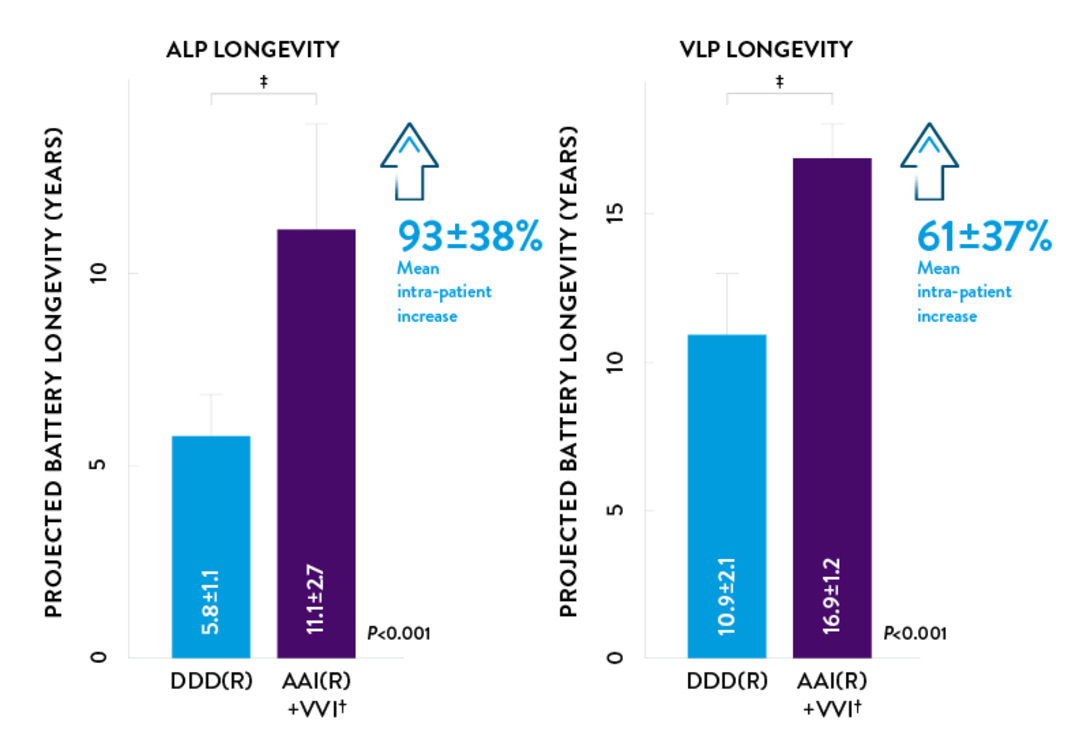
SIGNIFICANT BATTERY LONGEVITY INCREASE OBSERVED IN AAI(R)+VVI† PACING MODE10
- Existing or de novo implanted AVEIR™ DR leadless pacemaker (LP) systems were evaluated at 6 centers (N=139)
- At enrollment, battery longevity projections were recorded for both atrial and ventricular LPs when programmed to dual-chamber pacing rate response [DDD(R)] mode. All LP systems were then programmed to atrial pacing rate response + single chamber ventricular [AAI(R)+VVI†] mode
- At 6 months, intra-patient total projected longevities were compared for DDD(R) at enrollment vs AAI(R)+VVI† at 6 months
- In order to ensure accurate initial DDD(R) longevity estimates (e.g., pacing burden and i2i™ transmission counts), only patients enrolled with existing implants already programmed to DDD(R) were used for the battery longevity comparisons. Of these, 32 attended the 6-month visit
LONGEVITY IMPROVEMENT
Battery longevity comparison of DDD(R) at enrollment versus AAI(R)+VVI† at 6 months. Longevities were limited to patients with existing implants in DDD(R) mode who completed the 6-month visit (n=32).*
AVEIR™ DR LP DEMONSTRATES 2-YEAR SAFETY, ELECTRICAL PERFORMANCE AND HIGH i2i COMMUNICATION11
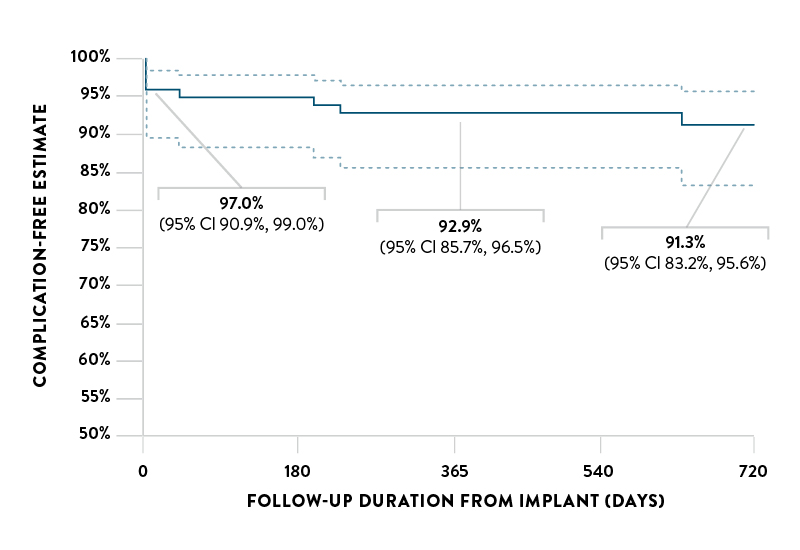
KAPLAN MEIER ANAYLSIS OF COMPLICATION FREE RATE THROUGH 24 MONTHS
- 100% IMPLANT SUCCESS
- HIGH LONG-TERM SAFETY:
97.0% complication-free survival at implant, 92.9% at 1 year, 91.3% at 2 years (most events in first 90 days) - STABLE ELECTRICAL PERFORMANCE:
decreasing capture thresholds, increasing atrial sensing, stable impedance - RELIABLE i2i COMMUNICATION:
90% success maintained through 24 months
| 0-90 day complications (number of patients) | 91-365 day complications (number of patients) | 366-720 day complications (number of patients) |
|---|---|---|
| Cardiac arrhythmia - Atrial fibrillation (3) | Thereshold elevation (1) | Thrombosis (1) |
| Thereshold elevation (1) | Oversensing (1) | |
| Device dislodgement (1) |
TV
TV
Understanding AVEIR VR Retrieval

Why Leadless Pacing Summit 2026 Matters
AVEIR Atrial LP AAI Implant Training Supplement
AVEIR DR Virtual Implant Training Supplement
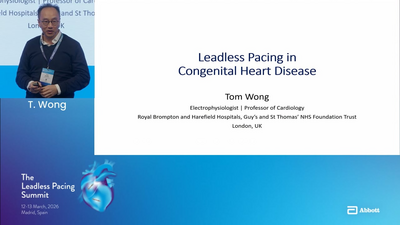
Leadless in Congenital Patients
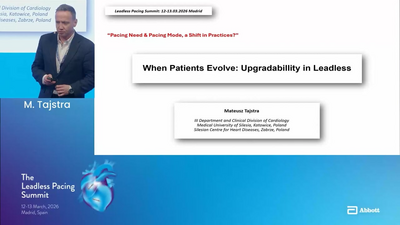
When Patients Evolve: Upgradability in Leadless
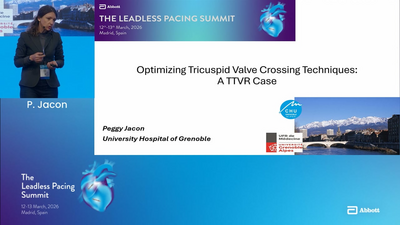
Optimizing Tricuspid Valve Crossing: Case example
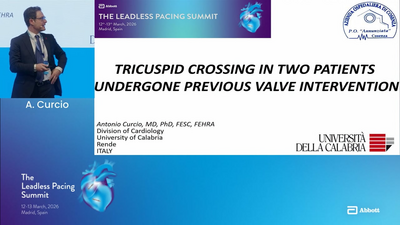
Optimizing Tricuspid Valve Crossing: Case example

Health Economics of Leadless Therapy

Learn AVEIR Leadless Pacemaker Follow-Up Checks
- AVEIR™ Leadless Pacemakers and Delivery Catheter IFU. ARTEN600361108.
- Micra‡ VR2 MC2VR01 IFU.
- Micra‡ AV2 MC2AVR1 IFU.
- Lo M, Amin A, Kowalski M, et al. Are Dual Leadless Pacemakers Safer than Transvenous Devices? Real-World Evidence from AVEIR™ DR Coverage with Evidence Development Study. Abstract presented at: Asia Pacific Heart Rhythm Society; Nov 12-15, 2025; Yokohama, Japan. [Data obtained from final presentation].
- Knops RE, Reddy VY, Ip JE, et al. A Dual-Chamber Leadless Pacemaker. N Engl J Med. 2023;388(25):2360-2370. doi: 10.1056/NEJMoa2300080.
- Knops RE, Reddy VY, Ip JE, et al. Safety and Electrical performance of the first dual-chamber leadless pacemaker at 6 months post-implant. Presented at: Asia Pacific Heart Rhythm Society; Sep 1-3, 2023; Hong Kong.
- Udo EO, Zuithoff NP, van Hemel NM, et al. Incidence and predictors of short- and long-term complications in pacemaker therapy: the FOLLOWPACE study. Heart Rhythm. 2012;9(5):728-35. doi: 10.1016/j.hrthm.2011.12.014.
- Reddy, VY, et al. Worldwide Experience with Leadless Pacemaker Retrievals: A Worldwide Nanostim Experience out of 9y. Presented at: Asia Pacific Heart Rhythm Society; Nov 18-20, 2022; Singapore.
- Gimbel JR, Bello D, Schmitt M, et al. Randomized trial of pacemaker and lead system for safe scanning at 1.5 Tesla. Heart Rhythm. 2013;10(5):685-91. doi: 10.1016/j. hrthm.2013.01.022.
- Ip JE, Badie N, Rashtian M, et al. Novel Pacing Mode Conserves Battery in Dual-Chamber Leadless Pacemakers. J Cardiovasc Electrophysiol. 2026;37(2):338-346. doi: 10.1111/jce.70224.
- Garweg C, Defaye P, Neuzil P, et al. Long term outcomes of dual chamber leadless pacemaker insights from European patients data. Poster presented at: European Heart Rhythm Association; April 12-14, 2026; Paris.
- Nilsson KR Jr, Birgersdotter-Green U, Saleem-Talib S, et al. Leadless atrial versus transvenous pacing for sinus node dysfunction: 1-year outcomes from the leadless ARRIVE real-world study. Europace. 2026;28(4):euag072. doi: 10.1093/europace/euag072.
- Glikson M, Nielsen JC, Kronborg MB, et al. 2021 ESC Guidelines on cardiac pacing and cardiac resynchronization therapy. Eur Heart J. 2021;42(35):3427-3520. doi: 10.1093/eurheartj/ehab364. Erratum in: Eur Heart J. 2022 May 1;43(17):1651. doi: 10.1093/eurheartj/ehac075.
- Nilsson KR, Birgersdotter-Green UM, Diaz JO, et al. PO-06-004 Leadless vs. transvenous atrial pacemakers: Real-world evidence from AVEIR™ AR coverage with evidence development study. Heart Rhythm. 2025;22(4):S633. Doi:10.1016/j.hrthm.2025.03.1552.
- I p JE, Brady PA, Kroman AM, et al. Leadless Versus Transvenous Single-Chamber Ventricular Pacemakers: Real-World Evidence From AVEIR™ VR Coverage With Evidence Development Study. J Am Heart Assoc. 2025;14(21):e042471. doi: 10.1161/JAHA.125.042471.
- Reddy VY, Exner DV, Doshi R, et al. Primary Results on Safety and Efficacy From the LEADLESS II-Phase 2 Worldwide Clinical Trial. JACC Clin Electrophysiol. 2022;8(1):115-117. doi: 10.1016/j.jacep.2021.11.002.
- Reddy VY, et al. Chronic Performance of a Novel Leadless Pacemaker: 1 Year Results from the LEADLESS II Trial. Presented at: Asia Pacific Heart Rhythm Society; Nov 18-20, 2022; Singapore.