

CARDIAC MONITORDESIGNED TO OUTPERFORM,
BUILT TO OUTLAST
ASSERT-IQ™ ICM IS DESIGNED FOR PATIENT MONITORING1

Patients with the following symptoms or conditions could benefit from monitoring or diagnostic evaluation with ASSERT-IQ™:
- ATRIAL FIBRILLATION (AF)
- BRADYCARDIA
- CRYPTOGENIC STROKE (CS)
- SYNCOPE
- TACHYCARDIA
- PALPITATIONS
- SEIZURES
- POST-AF ABLATION
INDICATIONS FOR USE2
The Assert-IQ™ insertable cardiac monitor (ICM) is indicated for the monitoring and diagnostic evaluation of patients who experience unexplained symptoms that may be cardiac-related such as: dizziness, palpitations, chest pain, syncope, and shortness of breath, as well as patients who are at risk for cardiac arrhythmias such as bradycardia, tachycardia, and sinus pauses. The Assert-IQ™ ICM is also indicated for patients who have been previously diagnosed with AF or who are susceptible to developing AF.
The Assert-IQ™ ICM is intended to be inserted subcutaneously in the left pectoral region, also described as the left anterior chest wall. The Assert-IQ™ ICM has not been specifically tested for pediatric use.
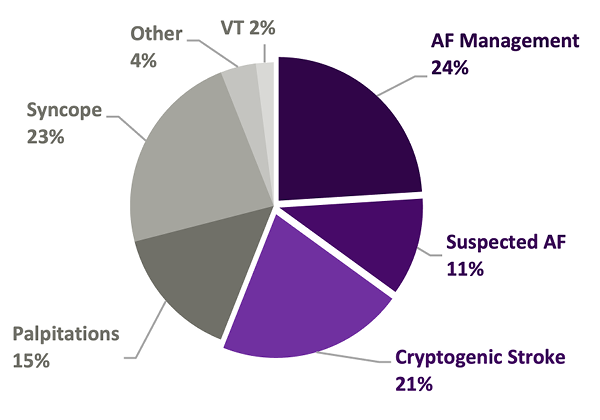
ICMs were originally used to diagnose syncope and palpitations; however, more than half of ICM implants currently are for diagnosis or monitoring of patients with AF.3
ICM IMPLANT INDICATION
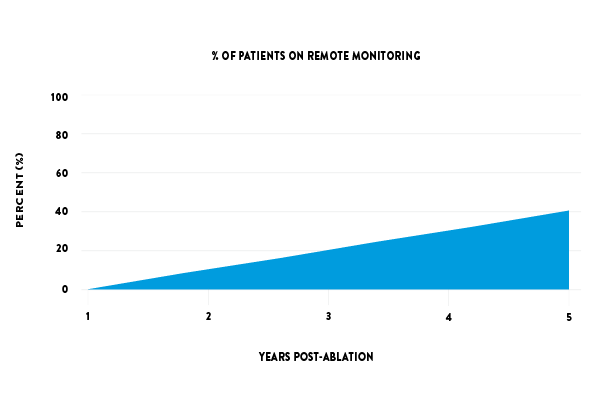
Approximately 40% of patients undergoing their first ablation receive some form of remote monitoring within 5 years of their procedure (ICM and external cardiac monitor).4
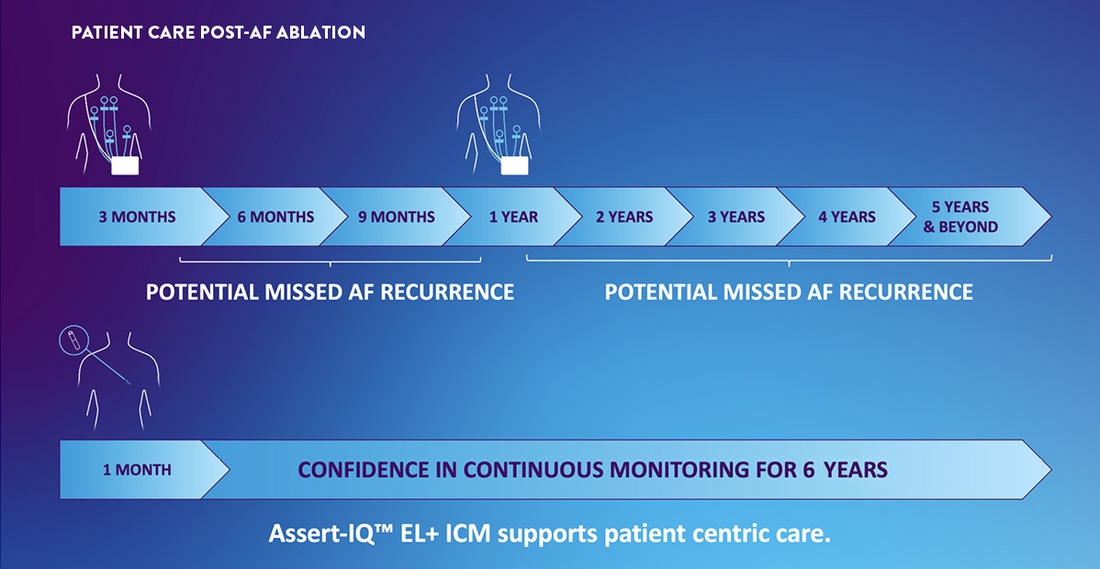
LONG-TERM MONITORING WITH AN ICM

Long-term monitoring AF in ~30% of CS patients.5
FIND OUT MORE:
AF DETECTION WITHIN CRYPTOGENIC STROKE PATIENTS

ICMs DETECT AF 3X FASTER than external cardiac monitoring methods for CS patients.6
GUIDELINES RECOMMEND AN ICM FOR AF DETECTION FOR PATIENTS WITH CRYPTOGENIC STROKE
2019 AMERICAN HEART ASSOCIATION (AHA)/AMERICAN COLLEGE OF CARDIOLOGY (ACC)/ HEART RHYTHM SOCIETY (HRS) ATRIAL FILBRILLATION GUIDELINES
Recommends use of an ICM in patients with cryptogenic stroke (Class IIa, Level of Evidence B-R).7
| RECOMMENDATION | CLASS | LEVEL |
|---|---|---|
| In patients with cryptogenic stroke (i.e., stroke of unknown cause) in whom external ambulatory monitoring is inconclusive, implantation of a cardiac monitor (loop recorder) is reasonable to optimize detection of silent atrial fibrillation. | IIa | B-R |
2020 EUROPEAN SOCIETY OF CARDIOLOGY (ESC) GUIDELINES: MANAGEMENT OF ATRIAL FIBRILLATION
In patients with stroke and without diagnosed AF, additional monitoring by non-invasive electrocardiogram (ECG) monitor or injectable recorder should be considered in the long-term.8
| RECOMMENDATION | CLASS | LEVEL |
|---|---|---|
| In stroke patients, additional ECG monitoring by long-term non-invasive ECG monitors or implanted loop recorders should be considered to document silent atrial fibrillation. | IIa | B |
Hub
TV

Remote Programming Overview
What’s New in ICM: Beyond Diagnosis

AV Block Programming Webinar
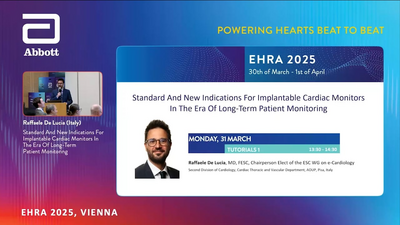
ICM Indications Update
- Monitoring Devices. Merlin™, Merlin™ 2 Patient Care System, Assert‑IQ™ Insertable Cardiac Monitor. Help Manual. December 2025. ARTEN600370391 A.
- Assert‑IQ™ Insertable Cardiac Monitor. User Manual. November 2025. ARTEN600376889 A.
- Kamsani SH, Middeldorp ME, Evans S, et al. Accuracy of Implantable Loop Recorders: Multicenter, Multidevice Comparison. JACC Clin Electrophysiol. 2026;12(5):1113-1127. doi: 10.1016/j.jacep.2025.12.039.
- Data on File. Abbott - CMS data.
- Kloosterman EM, Rosman JZ, Berkowitz EJ, et al. Treatment of Cryptogenic Stroke Patients with Atrial Fibrillation Detected by Insertable Cardiac Monitors Reduces Recurrent Stroke Risk to Background Levels. J Innov Card Rhythm Manag. 2021;12(12):4812-4817. doi: 10.19102/icrm.2021.121204.
- Boriani G, Auricchio A, Botto GL, et al. Insertable cardiac monitoring results in higher rates of atrial fibrillation diagnosis and oral anticoagulation prescription after ischaemic stroke. Europace. 2023;25(9):euad212. doi: 10.1093/europace/euad212.
- January CT, Wann LS, Calkins H, et al. 2019 AHA/ACC/HRS Focused Update of the 2014 AHA/ACC/HRS Guideline for the Management of Patients With Atrial Fibrillation: A Report of the American College of Cardiology/American Heart Association Task Force on Clinical Practice Guidelines and the Heart Rhythm Society. J Am Coll Cardiol. 2019;74(1):104-132. doi: 10.1016/j.jacc.2019.01.011.
- Hindricks G, Potpara T, Dagres N, et al. 2020 ESC Guidelines for the diagnosis and management of atrial fibrillation developed in collaboration with the European Association for Cardio-Thoracic Surgery (EACTS): The Task Force for the diagnosis and management of atrial fibrillation of the European Society of Cardiology (ESC) Developed with the special contribution of the European Heart Rhythm Association (EHRA) of the ESC. Eur Heart J. 2021;42(5):373-498. doi: 10.1093/eurheartj/ehaa612. Erratum in: Eur Heart J. 2021;42(5):507. doi: 10.1093/eurheartj/ehaa798. Erratum in: Eur Heart J. 2021;42(5):546-547. doi: 10.1093/eurheartj/ehaa945. Erratum in: Eur Heart J. 2021;42(40):4194. doi: 10.1093/eurheartj/ehab648.
™ indicates a trademark of the Abbott group of companies.