

Die Mitralklappeninsuffizienz ist die häufigste Mitralklappenerkrankung.1 Ihre Prävalenz liegt bei etwa 2 % in der Allgemeinbevölkerung und nimmt mit steigendem Lebensalter zu:2 Etwa 10 % der Menschen über 70 Jahre haben eine klinisch bedeutsame Mitralklappeninsuffizienz.3
Unbehandelt kann eine Mitralklappeninsuffizienz zu einer Herzinsuffizienz führen oder eine bestehende Herzinsuffizienz verschlechtern – mehr Hospitalisierungen und erhebliche Kosten für die Gesundheitssysteme sind die Folge.4,5
Transcatheter Edge-to-Edge Repair (TEER) ALS MINIMALINVASIVE BEHANDLUNGSOPTION BEI MITRALINSUFFIZIENZ
Viele Patient:innen mit einer Indikation zur Rekonstruktion oder zum Ersatz der Mitralklappe werden nicht chirurgisch versorgt, weil das perioperative Risiko zu hoch ist. Die kathetergestützte Mitralklappenreparatur (TMVr) ist eine alternative minimalinvasive Therapieoption, um die MI zu behandeln. Da es sich um ein perkutanes Verfahren handelt, kann dadurch eine Operation (am offenen Herzen) vermieden werden.6
PRIMÄRE MITRALINSUFFIZIENZ (PMI)
Eine TEER kann bei symptomatischen Patient:innen erwogen werden, welche die echokardiografischen Eignungskriterien erfüllen, vom Heart-Team als inoperabel oder als Hochrisikopatient:innen für einen chirurgischen Eingriff eingestuft werden und bei denen die Prozedur nicht als aussichtslos bewertet wird (IIb, B).16
SEKUNDÄRE MITRALINSUFFIZIENZ (SMI)
Die TEER mit dem MitraClip™-System ist die Therapieoption mit der besten Evidenz in dieser Indikation. Eine TEER sollte bei ausgewählten symptomatischen Patient:innen in Erwägung gezogen werden, die nicht für eine Operation geeignet sind und die Kriterien erfüllen, die eine erhöhte Chance auf ein Ansprechen auf die Behandlung erwarten lassen (IIa).16
ERFAHREN SIE MEHR ÜBER:
TV

ESC 2026 | Live echocardiography
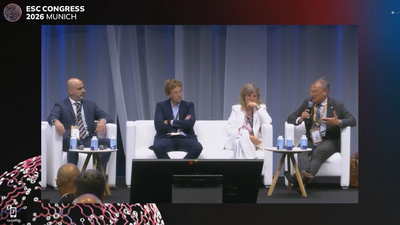
ESC 2026 Symposium
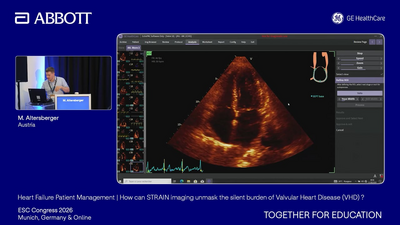
ESC 2026 | Heart Failure Patient Management

ESC 2026 | Live echocardiography

ESC 2026 | Procedural hands-on | Mitral Regurgitation

ESC 2026 | Procedural hands-on | Mitral Regurgitation

A Defining Moment Has To Start Somewhere. Why Not With You?

Webinar for Collaborative Management of HF Patients with MR

M-TEER: Best treatment strategies for FMR AND DMR

M-TEER: State of the art echocardiography imaging modalities
HUB

Valvular Heart Disease Guidelines at a Glance
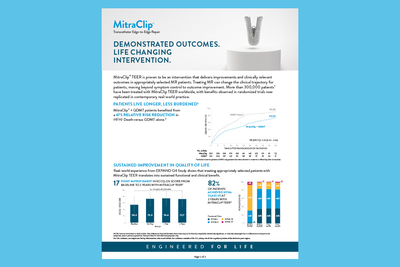
Demonstrated Outcomes. Life-Changing Intervention
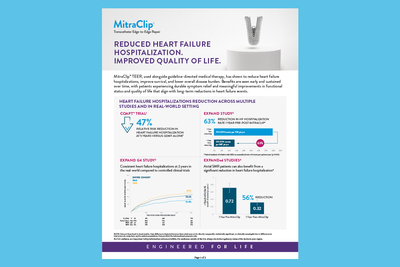
Reduced HF Hospitalisation. Improved Quality of Life
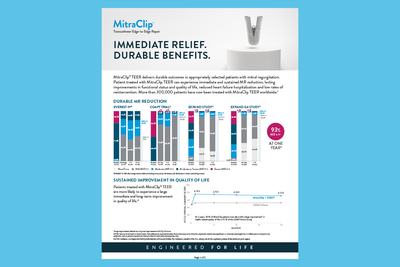
Immediate Relief. Durable Benefits
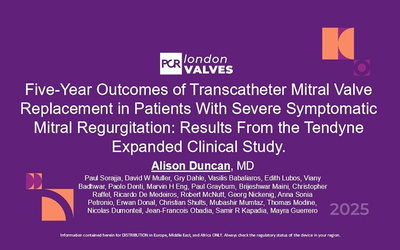
Tendyne expanded clinical study | PCR LV 2025

EXPAND G4 clinical data release | PCR LV 2025

TEER G5 Brochure 2025
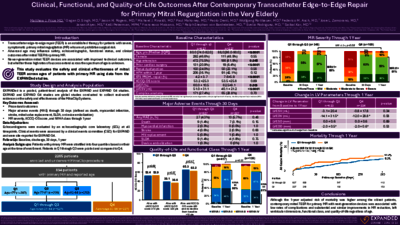
Poster: Primary MR in the Very Elderly
Prognosis of TR after MitraClip for MR

Epic Mitral – 10-Year Clinical Outcomes
- Lung B, Baron G, Butchart EG, et al. A prospective survey of patients with valvular heart disease in Europe: The Euro Heart Survey on Valvular Heart Disease. Eur Heart J. 2003;24(13):1231–43. doi.org/10.1016/S0195-668X(03)00201-X.
- Cahill TJ, Prothero A, Wilson J, et al. Community prevalence, mechanisms and outcome of mitral or tricuspid regurgitation. Heart. 2021;107(12):1003–9. dx.doi.org/10.1136/heartjnl-2020-318482.
- Singh JP, Evans JC, Levy D, et al. Prevalence and clinical determinants of mitral, tricuspid, and aortic regurgitation (the Framingham Heart Study). Am J Cardiol. 1999;83(6):897–902. doi.org/10.1016/S0002-9149(98)01064-9.
- Alegria-Barrero E, Chan PH, Paulo M, et al. Edge-to-edge percutaneous repair of severe mitral regurgitation–state-of-the-art for Mitraclip™ implantation. Circ J. 2012;76(4):801–8. doi.org/10.1253/circj.CJ-11-1462.
- Braunschweig F, Cowie MR, Auricchio A. What are the costs of heart failure? Europace. 2011;13 Suppl 2:ii13–7. doi.org/10.1093/europace/eur081.
- Pedrazzini GB, Faletra F, Vassalli G, et al. Mitral regurgitation. Swiss medical weekly. 2010;140(3–4):36–43. doi.org/10.4414/smw.2010.12893.
- National Health Service. Mitral valve problems. 2020. Available at: www.nhs.uk/conditions/mitral-valve-problems (last accessed: March 2023).
- Mayo Clinic. Mitral valve regurgitation. 2019. Available at: www.mayoclinic.org/diseases-conditions/mitral-valve-regurgitation/symptoms-causes/syc-20350178 (last accessed: March 2023).
- Sparano DM, Ward RP. Management of asymptomatic, severe mitral regurgitation. Current treatment options in cardiovascular medicine. 2012;14(6):575-83.
- Cioffi G, Tarantini L, De Feo S, et al. Functional mitral regurgitation predicts 1-year mortality in elderly patients with systolic chronic heart failure. Euro J Heart Fail. 2005;7(7):1112–7. doi.org/10.1016/j.ejheart.2005.01.016.
- Enriquez-Sarano M, Avierinos J-F, Messika-Zeitoun D, et al. Quantitative determinants of the outcome of asymptomatic mitral regurgitation. N Engl J Med. 2005;352(9):875–83. doi.org/10.1056/NEJMoa041451.
- Grigioni F, Tribouilloy C, Avierinos J-F, et al. Outcomes in mitral regurgitation due to flail leaflets a multicenter European study. JACC Cardiovascular Imaging. 2008;1(2):133–41. doi.org/10.1016/j.jcmg.2007.12.005.
- Vahanian A, Beyersdorf F, Praz F, et al. 2021 ESC/EACTS Guidelines for the management of valvular heart disease: Developed by the Task Force for the management of valvular heart disease of the European Society of Cardiology (ESC) and the European Association for Cardio-Thoracic Surgery (EACTS). Euro Heart J. 2022;43(7):561–632. doi.org/10.1093/eurheartj/ehab395.
- Spieker M, Kelm M, Westenfeld R. Moderne Diagnostik der Mitral- und Trikuspidalklappe – was ist wirklich notwendig? Aktuelle Kardiologie. 2017;6:265–70. doi.org/10.1055/s-0043-115534.
- Young A, Feldman T. Percutaneous mitral valve repair. Curr Cardiol Rep. 2014;16(1):443. doi.org/10.1007/s11886-013-0443-6.
- Gaasch WH, Meyer TE. Left ventricular response to mitral regurgitation: implications for management. Circulation. 2008;118(22):2298–2303. doi.org/10.1161/CIRCULATIONAHA.107.755942.
- Otto CM, Nishimura RA, Bonow RO, et al. 2020 ACC/AHA Guideline for the Management of Patients With Valvular Heart Disease: Executive Summary: A Report of the American College of Cardiology/American Heart Association Joint Committee on Clinical Practice Guidelines. Circulation. 2021;143(5):e35–e71. doi.org/10.1161/CIR.0000000000000932.
- Ling LH, Enriquez-Sarano M, Seward JB, et al. Clinical outcome of mitral regurgitation due to flail leaflet. N Engl J Med. 1996;335(19):1417-1423. doi.org/10.1056/NEJM199611073351902.
- Mirabel M, Iung B, Baron G, et al. What are the characteristics of patients with severe, symptomatic, mitral regurgitation who are denied surgery? Eur Heart J. 2007;28(11):1358–65. doi.org/10.1093/eurheartj/ehm001.
- Nielsen SL. Current status of transcatheter mitral valve repair therapies - From surgical concepts towards future directions. Scand Cardiovasc J. 2016;50(5-6):367-376. doi.org/10.1080/14017431.2016.1248482.
- Iung B, Baron G, Tornos P, et al. Valvular heart disease in the community: a European experience. Curr Probl Cardiol. 2007;32(11):609-661. doi.org/10.1016/j.cpcardiol.2007.07.002.
- Praz F, Borger MA, Lanz J, et al. 2025 ESC/EACTS Guidelines for the management of valvular heart disease: Developed by the task force for the management of valvular heart disease of the European Society of Cardiology (ESC) and the European Association for Cardio-Thoracic Surgery (EACTS). Eur Heart J. 2025;46(44):4635-4736. doi: 10.1093/eurheartj/ehaf194.
- Heidenreich PA, Bozkurt B, Aguilar D, et al. 2022 AHA/ACC/HFSA Guideline for the Management of Heart Failure: A Report of the American College of Cardiology/American Heart Association Joint Committee on Clinical Practice Guidelines. Circulation. 2022;145(18):e895–e1032. doi.org/10.1161/CIR.0000000000001063.
- McDonagh TA, Metra M, Adamo M, et al. 2021 ESC Guidelines for the diagnosis and treatment of acute and chronic heart failure: Developed by the Task Force for the diagnosis and treatment of acute and chronic heart failure of the European Society of Cardiology (ESC) With the special contribution of the Heart Failure Association (HFA) of the ESC. Eur Heart J. 2021;42(36):3599–3726. doi.org/10.1093/eurheartj/ehab368.
- Coats AJS, Anker SD, Baumbach A, Alfieri O, von Bardeleben RS, Bauersachs J, et al. The management of secondary mitral regurgitation in patients with heart failure: a joint position statement from the Heart Failure Association (HFA), European Association of Cardiovascular Imaging (EACVI), European Heart Rhythm Association (EHRA), and European Association of Percutaneous Cardiovascular Interventions (EAPCI) of the ESC. Euro Heart J. 2021;42(13):1254–1269. doi.org/10.1093/eurheartj/ehab086.